“Should we watch Metropolitan?”
It’s an entreaty I’ve made to friends several times, to poor effect. Most recently, my fiancée plainly told me she didn’t enjoy the experience.
For those unfamiliar, Metropolitan is a 1990 comedy of manners written and directed by Whit Stillman, a man whose name just called us poor. The film follows a group of waspy Ivy League students through debutante balls, “non-exclusivePark Avenue afterparties,” and a long list of NYC landmarks that have historically been inhabited by the city’s upper class (21 Club, The Grand Ballroom at The Plaza, etc.).
At the risk of losing you, I’ll let you know right away that literally nothing happens the whole movie. The action—long walks, a bridge game, mild physical violence, and the eventual drawing of a possibly fake gun—makes Pride & Prejudice look like Predator.
But action’s not what we’re here for. We’re here for a series of delightfully overwrought conversations about literature, socialist utopias, and “downward social mobility.” It’s reminiscent of the conversations all college students have over winter break after becoming radicalized by barely controversial political ideals—but filtered through a really expensive Upper East Side education.
Watching Metropolitan, we get to sit in on a group of earnest young people debating the existence of God and referencing anti-capitalist economists from the salons of $10-million co-ops. Jane (Allison Rutledge-Parisi) is concerned about the shortage of debutante escorts. Sally (Dylan Hundley) rails against snobbery in the snobbiest way possible. Charlie (Taylor Nichols) complains that The Discreet Charm of the Bourgeoisie is not the flattering portrait of high society it could have been. Charlie’s also convinced they’re all doomed.
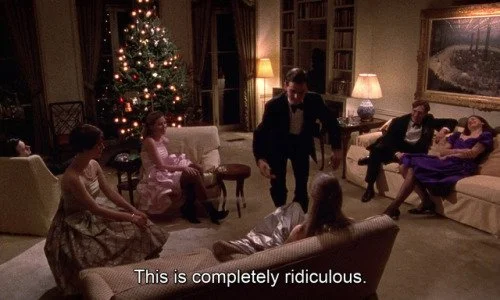
While we definitely can’t empathize, Stillman imbues the characters with enough painful sincerity and charm that you’re way less annoyed by them than you thought you’d be. You almost, almost, feel for their plight as sheltered rich kids who are ridiculously well-educated and comically ill-prepared to enter the real world.
The pathos and authenticity we encounter in Stillman’s writing stems from the fact that he grew up in the same social environment he’s sending up. And he’s said that he put aspects of his own personality into some of his characters. Nick (Chris Eigeman) is an acerbic provocateur who embraces their world in a deliberately superficial way. Tom (Edward Clements) is an interloper who was once a member of the elité but is now living on the Upper West Side—which we’re made to believe is a kind of squatter settlement.
Most of the plot centers around the love lives of Tom, Tom’s seductive ex Serena (Ellia Thompson), the hapless Charlie, and Audrey (Carolyn Farina), a sharp ingénue type who’s by far the most likable character we encounter.
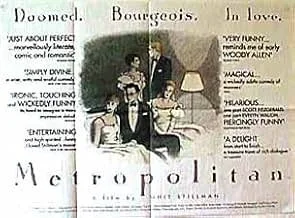
The screenplay for Metropolitan earned Stillman an Academy Award nomination. Unfortunately, he lost. Whoever wrote the screenplay for Ghost won. Ghost. Really? Whatever. Metropolitan is funny and biting and surprisingly warm at the same time. And even though it’s heavy on dialogue, we’re never left to linger on any one conversational thread, which keeps things moving and also illustrates the unfocused nature of the characters’ thought processes and, possibly, their life trajectories.
Metropolitan also captured a New York that Stillman seemed to believe was in its waning moments, a theme that’s expressed by his characters throughout. Nick gives a monologue about his generation’s desire for convenience over things that last. Charlie feels that the fall of “the whole preppy class” is imminent. In the most literal example, Tom offhandedly responds to Serena’s musings about the charm of the St. Regis Hotel: “Yes. They’ll probably knock it down soon.”
Even though, like most other things in the movie, the idea of a disappearing New York is knowingly overstated, Stillman was right in many ways. The Waldorf, where one of the debutante balls takes place, is closed at the moment. The RF Tripler on Madison that Nick mentions is no longer an option for young debs in need of a clothier. The palatial Scribner Bookstore on 5th Avenue, which Audrey visits on Christmas Eve, closed just after the film was shot and is now, tragically, a Club Monaco. Checkered cabs, the group’s preferred method of transportation, aren’t a thing anymore.
All of this is to say that you should watch Metropolitan. It’s on HBO Max, but if you really want to embrace the pretention, you can buy Criterion’s Whit Stillman Trilogy Boxed Set, which includes Metropolitan, Barcelona, and The Last Days of Disco, all of which were meant to take place, loosely, in the same bourgeoisie cinematic universe.
Your delight in exploring the world of “doomed” UES socialites can be summed up by a quip Nick makes to Tom about an international deb ball the group has gathered to watch like a sporting event:
“I guess you could say it’s extremely vulgar. I like it a lot.”